Sun Lounger Adjustment Mechanisms: What Buyers Should Compare
Compare sun lounger adjustment mechanisms with exact-model evidence for positions, operation, pinch points, hardware, cleaning, samples and instructions.
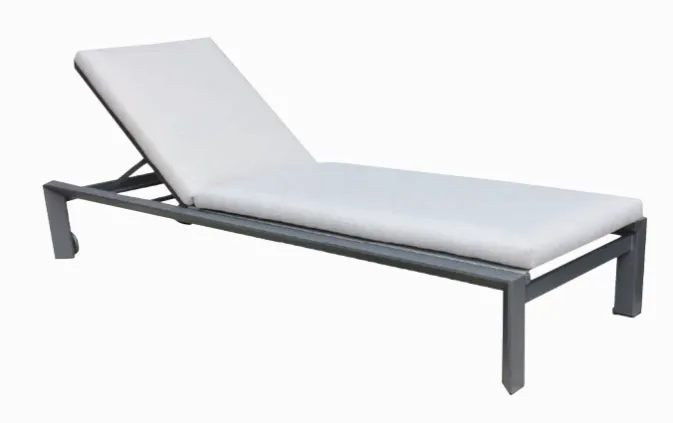
Compare an adjustable sun lounger by recording the exact model, available backrest positions, operating sequence, moving components, hardware, instructions and sample observations. Do not compare only the number of positions. Buyers also need to know how a guest reaches the control, whether the back returns flat, where hands may contact moving parts, how the mechanism is cleaned and how it behaves after repeated normal operation. Require supplier evidence for each claim and keep unverified durability or cycle statements out of the decision.
Separate fixed and adjustable requirements
First decide whether the project needs an adjustable back at all. A fixed lounger removes the operating step, while an adjustable product may support reading, resting and reclining. The choice depends on guest use, staffing, cleaning and the product evidence available, not on the assumption that more movement is always better.
Record required positions in functional words such as upright, intermediate and flat. Let the supplier map those needs to the exact model rather than the buyer guessing a mechanism from photographs.
Ask for the operating sequence
Request a short instruction or demonstration that shows how the back is raised, lowered and returned. Identify whether the user must lift, release, slide or reposition a support. Record any step that staff need to explain or reset.
Nardi's Plano product page and Tropitone's chaise-lounge category show that named products can state different adjustment formats. Their position counts belong to those models and must not be transferred to another lounger.
Identify every moving and contact point
Ask for clear views of the support bar, ratchet, hinge, track, stop and any fastener that forms the mechanism. Note where hands, towels, cushions and cleaning tools may contact the moving area. The project team should review safety and accessibility for the intended setting.
Avoid substituting look-alike hardware. If a part must be removable for maintenance, request its exact reference and instruction.
Build a mechanism comparison
| Decision | Evidence | Sample check |
|---|---|---|
| Positions | Exact-model instruction or drawing | Confirm each stated position and flat return |
| Operation | Step sequence and control location | Observe reach, effort and reset without forcing |
| Moving parts | Mechanism and hardware views | Check alignment, clearance and visible contact |
| Soft goods | Sling or cushion relationship | Confirm nothing obstructs normal movement |
| Cleaning | Care and access instructions | Check whether debris-prone areas are reachable |
| Record control | Model and revision reference | Match sample, quotation and order documents |
Check the mechanism with the exact soft goods
A sling, pad or cushion can change access to the operating area. Review the lounger in the configuration that will be supplied. Ask how cushions attach, move or must be removed when the backrest changes position.
Do not claim that a fabric, cushion or mechanism is easier to maintain without observing the exact combination and reviewing its care instructions.
Use a repeatable sample procedure
Before the review, list the supplier-stated positions and operating steps. During the check, move the lounger only as instructed, record whether each position is reached and note any uncertainty without diagnosing the cause. Return the product to its normal state and photograph the mechanism from consistent angles.
This is a practical sample check, not a certification or lifecycle test. If formal test evidence is required, request the applicable report and verify its model scope.
Connect the mechanism to poolside operations
Ask who resets loungers, how often backs are moved, where towels sit and how staff clean around the mechanism. Consider storage and movement separately from adjustment. A model can be adjustable without being confirmed stackable, and wheels or arms must be recorded from the exact product.
Use the commercial poolside page to keep the mechanism decision connected to the overall zone brief.
Common questions
Is a higher number of positions always better?
No. Compare the positions the project needs, the operating sequence, cleaning access and exact-model evidence.
Can the mechanism be approved from a video?
A video can explain operation, but the buyer may still need an exact-model sample, drawing, instruction and any required formal evidence.
Does adjustable mean the lounger lies completely flat?
Not necessarily. Ask for the exact position record and confirm the flat state only when the supplier documents it.
Should staff lubricate or alter a stiff mechanism?
Follow the exact maintenance instruction. Do not add lubricants, bend parts or substitute hardware without approved guidance.
Prepare a mechanism-focused RFQ
Send the required user positions, pool or terrace context, quantity assumption, destination, reference model and evidence request. Compare options in the sun loungers and beach chairs category, then record open questions in the supplier clarification log.
Further reading
Tropitone's Laguna Beach lounger page and Nardi's Atlantico page provide independent examples of model-specific adjustment statements.