Oct 6, 2026Buying Guides
How to Create an Outdoor Furniture Finish Approval Record
Create an outdoor furniture finish approval record for color, gloss, texture, substrate, sample identity, revision and production reference.
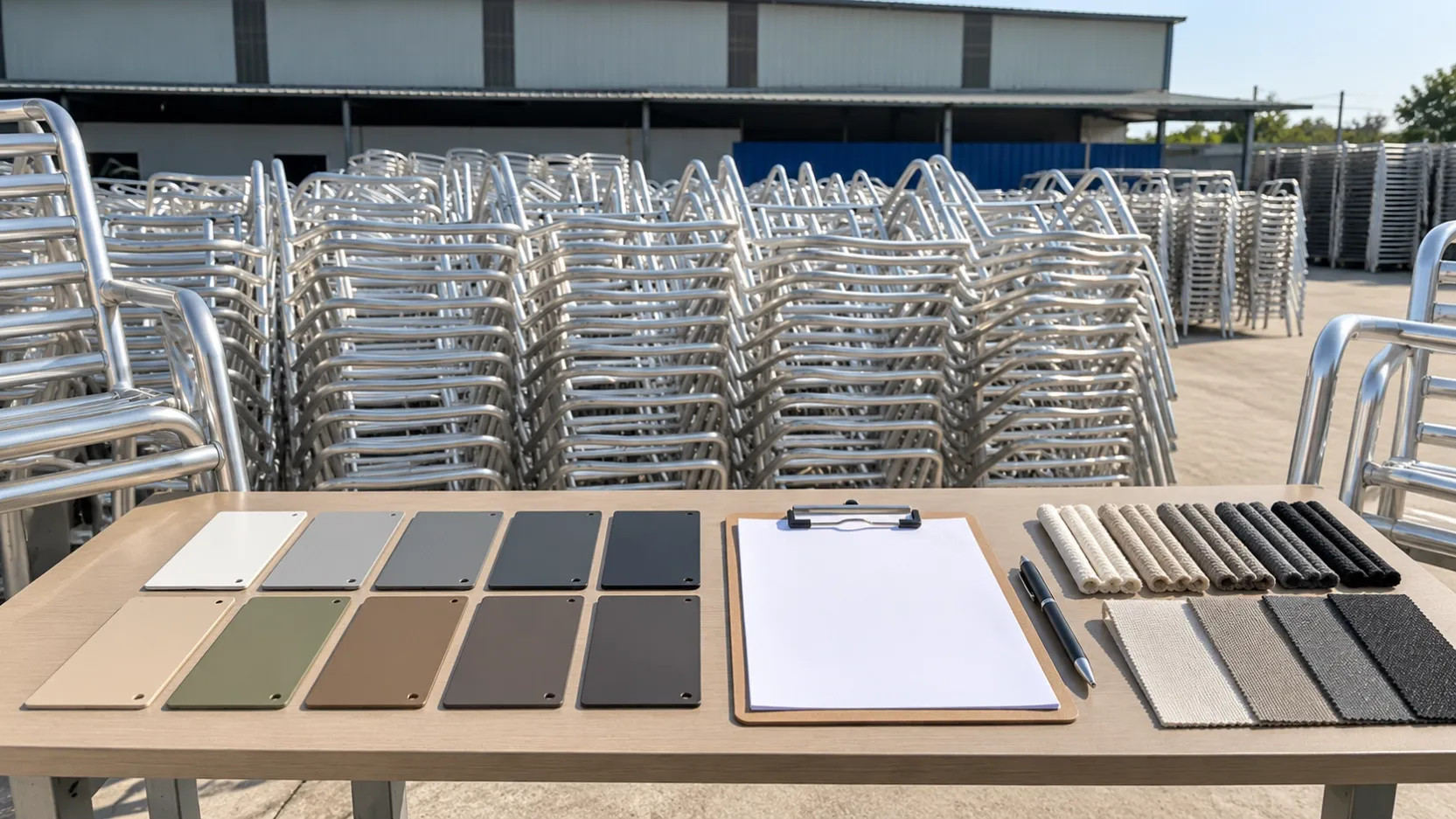
“Approved grey” is not a complete finish instruction. A usable record identifies the physical sample, substrate, color reference, surface appearance, product components covered and the revision that production should follow.
Approve color, gloss and texture separately
Two surfaces can use a similar color name and still look different because of gloss, texture, material or lighting. Record these decisions separately, then review them together on the intended substrate whenever a physical sample is available.
A photograph can document the review but should not become the sole color master. Screens, cameras and lighting can change appearance.
Identify exactly what the sample controls
Finish approval record
Field | What to record | Control question
Sample identity | Unique ID, issue date and revision | Can both parties identify the same physical or controlled sample?
Substrate | Actual material and component represented | Is the sample relevant to aluminum, rope, fabric or another stated material?
Appearance | Color reference, gloss level, texture and direction where applicable | Are the visible characteristics separated clearly?
Scope | Models, components and zones covered | Does the approval apply to the frame, weave, cushion or a combination?
Review condition | Location, light source, date and adjacent materials | Can a later reviewer understand how the decision was made?
Decision | Approved, approved with named change, rejected or pending | Is the next action unambiguous?
Use one controlled master
Choose one approved master or controlled reference and record who holds it. Protect it from dirt, light and handling changes, and do not treat several unlabelled samples as equivalent. If buyer and supplier each retain a reference, confirm that they belong to the same issue.
For standard color systems, record the exact system and code as one part of the instruction. A code does not by itself define every substrate, gloss or texture decision.
Link the finish to the product record
Connect the approval to the current model, drawing or configuration and to the relevant purchase-order line. If rope, fabric, frame and table top use separate references, list each one rather than combining them into a vague “same as sample” note.
The customization approval guide (https://www.dmfurnitures.com/blog/customization-notes-outdoor-furniture-projects) helps structure broader changes. Use the purchase-order line-item guide (https://www.dmfurnitures.com/blog/outdoor-furniture-purchase-order-line-items) to carry the approved revision into the order.
Control changes after approval
When a sample changes, create a new revision, state what changed and record whether the earlier approval is withdrawn or retained for another item. Do not overwrite a photograph or rename a file without preserving the decision history.
If the available material or process changes, pause the affected approval and request a new sample or written review. Do not assume that a close visual substitute has identical performance or compatibility.
Run a final release check
• Sample and revision are uniquely identified
• Substrate and component are named
• Color, gloss and texture are separately stated
• Models and order lines covered are listed
• Decision and approver are recorded
• Controlled sample custody is clear
• Unresolved fields remain pending, not guessed
Common questions
Is a RAL code enough to approve a powder-coated frame?
It helps define a color reference, but buyers should also confirm the relevant substrate, surface appearance, sample issue and the components covered.
Can we approve from a phone photo?
A photo can support identification and discussion, but device display, camera settings and lighting make it unsuitable as the only controlled color reference.
Should rope and fabric use the same approval sheet?
They may be grouped under one product record, but each material reference and the component it controls should remain distinct.
What happens when the buyer requests a change?
Issue a new revision, describe the change, identify affected models or lines and obtain approval before treating it as released.
Send a controlled finish brief
Share the model, component, reference system, sample ID, required appearance and decision deadline with your enquiry. DM Furniture can review available options against current product information; exact finish and production scope require confirmation.
Review material choices first with the outdoor furniture material guide (https://www.dmfurnitures.com/blog/outdoor-furniture-material-notes-b2b-buyers).
Further reading
RAL K6 color samples (https://www.ral-farben.de/en/ral-k6-box) explains viewing physical color sheets under different lighting conditions. FIRA's furniture sourcing overview (https://www.fira.co.uk/news/article/updated-guide-what-due-diligence-actually-looks-like) highlights agreed specifications, quality control and technical records. Neither source confirms a DM Furniture finish or test result.