Oct 6, 2026Buying Guides
How to Plan Seasonal Storage Before Selecting Outdoor Furniture
Plan seasonal storage before selecting outdoor furniture by checking stackability, moving units, cushion storage, cleaning, ventilation and reopening records.
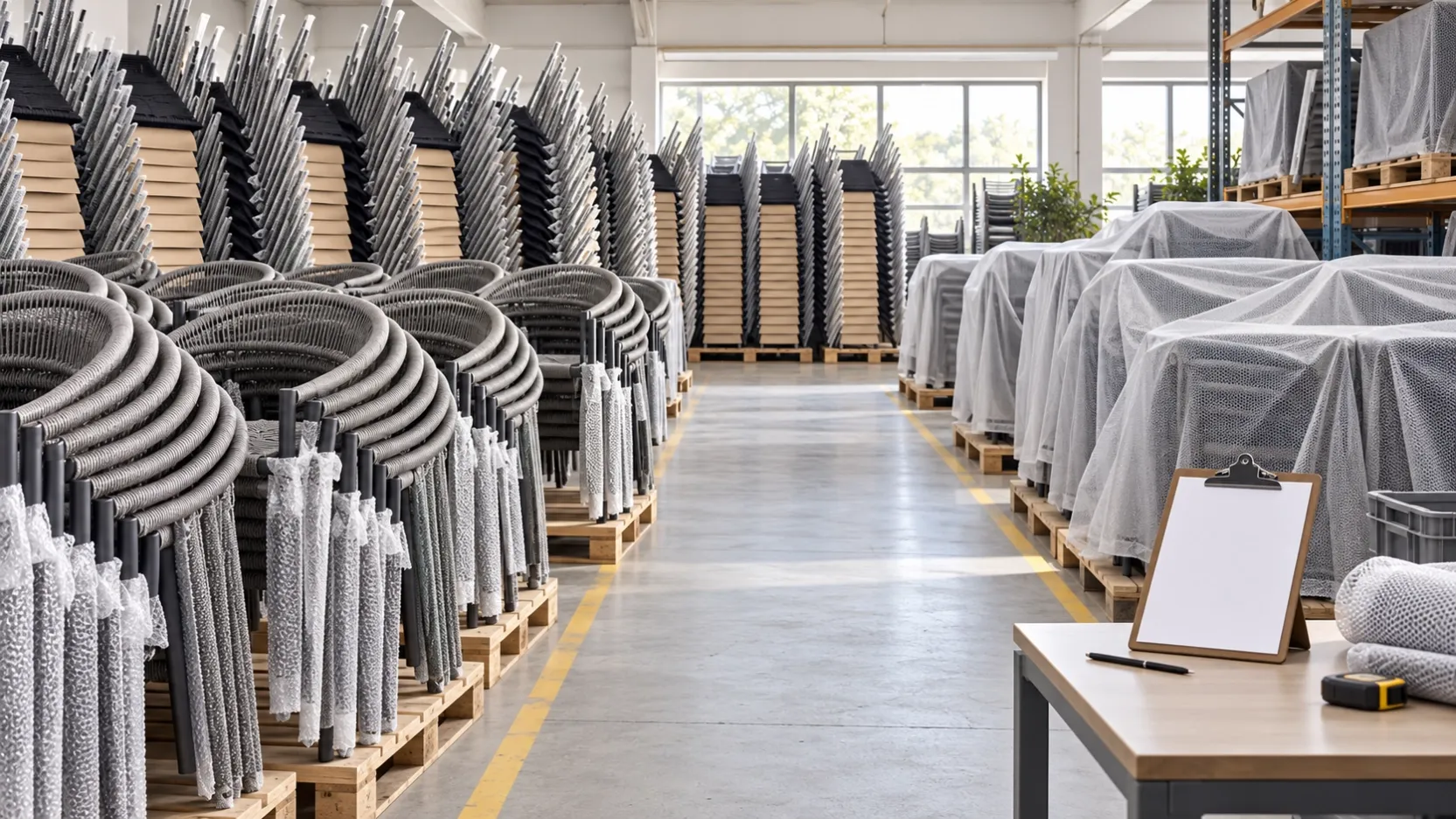
Storage is a product-selection constraint, not only an end-of-season task. Check the number of moving units, stack or knock-down method, cushion volume, cleaning and drying needs, route access and reopening process before approving an outdoor furniture mix.
Define the operating scenario first
Ask which items remain in use, which move under cover and which enter long-term storage. Record the expected shutdown period, local exposure, available staff, access route and whether the storage area is shared with other equipment.
Do not assume every outdoor product can stay outside under a cover or that every chair is stackable. Confirm the care, movement and stacking guidance for each selected model.
Turn the furniture schedule into a storage schedule
Storage planning fields
Furniture group | Information to confirm | Space or handling question
Dining and bar chairs | Whether stacking is approved, stack limit if provided, and protection points | How many stacks and how will they move safely?
Tables | Folding, knock-down or fixed construction and top-care instructions | Are racks, separators or assembly space required?
Sofas and lounge seating | Largest rigid section, connectors and cover or storage guidance | Will each section pass the route and fit the allocated bay?
Loungers and hanging chairs | Confirmed moving or disassembly method and loose components | How will frames, bases and cushions be identified together?
Cushions and accessories | Cleaning, drying, labelling and storage instructions | Is clean, dry, ventilated indoor volume available?
Measure storage volume and the routeList the number of storage units after any confirmed stacking, folding or disassembly. Measure the storage bay, shelf or rack and the route from each operating zone. Include doors, turns, stairs, elevators and the space needed to place or retrieve an item without damaging neighbouring stock.
Use the delivery access checklist (https://www.dmfurnitures.com/blog/outdoor-furniture-delivery-access-checklist) for the route logic, but create a separate storage route record because seasonal movement may use different doors, equipment or staffing.
Plan cleaning and drying before covering
Follow the manufacturer-issued care instructions for each material and model. Schedule enough time and space for items to be cleaned, inspected and fully dried before storage or covering. Do not apply a generic chemical, coating or repair method across different materials.
Keep cushions and removable textiles under their applicable care instructions. Label loose pieces so they return to the correct model and zone. A protective cover is not a substitute for confirming ventilation, drainage and the condition of the item beneath it.
Protect identity and retrieval order
• Assign a storage location to each furniture group
• Keep model and zone references readable without unpacking everything
• Separate unresolved or damaged items from ready-to-use stock
• Record loose hardware and connectors with the correct product
• Keep aisles and access controls appropriate for the site• Plan the retrieval order around the reopening sequence
Connect the storage record to the maintenance handover file (https://www.dmfurnitures.com/blog/outdoor-furniture-maintenance-handover-file) so inspection findings and approved actions remain visible.
Inspect before reopening
Do not move items directly from storage to guest areas without a documented check. Confirm identity, visible condition, assembly, stability and the completion of any outstanding action under the property’s own procedure.
For a seasonal hospitality property, map the schedule to hotel and resort zones (https://www.dmfurnitures.com/hotel-resort-outdoor-furniture) or the garden and villa patio guide (https://www.dmfurnitures.com/garden-villa-patio-outdoor-furniture).
Common questions
Does “outdoor” mean the furniture can stay uncovered all winter?
Not automatically. Follow the model-specific care and storage guidance and consider the property’s actual climate and exposure.
Can all dining chairs be stacked?
No. Treat stacking as model-specific. Confirm whether it is approved and follow any supplied limit and protection instructions.
Should cushions be counted separately?
Yes. Their cleaning, drying, identification and storage volume may control the plan even when frames stack efficiently.
When should storage planning affect the RFQ?
Include it before product approval whenever the property has a seasonal shutdown, limited storage, narrow routes or a required operating reset.
Add storage constraints to product selection
Send the project zones, shortlisted models, quantities, shutdown plan and known route or storage limits. DM Furniture can review current product information and clarify which details still need confirmation before selection.
Importers planning a broader range can also use the assortment planning guide (https://www.dmfurnitures.com/blog/plan-outdoor-furniture-assortment-importers).
Further reading
Tropitone product care (https://www.tropitone.com/product-care) and Fermob maintenance information (https://www.fermob.com/us/furniture/spare-parts-maintenance.html) illustrate why care guidance remains product- and collection-specific. They do not establish instructions for DM Furniture models.https://www.dmfurnitures.com/blog/outdoor-furniture-delivery-access-checklisthttps://www.dmfurnitures.com/blog/outdoor-furniture-maintenance-handover-file