Buying Guides
Choosing a Chair Mix for a Restaurant Terrace
Allocate outdoor dining armchairs and side chairs table by table using service flow, real chair fit and an exact-model buying schedule.
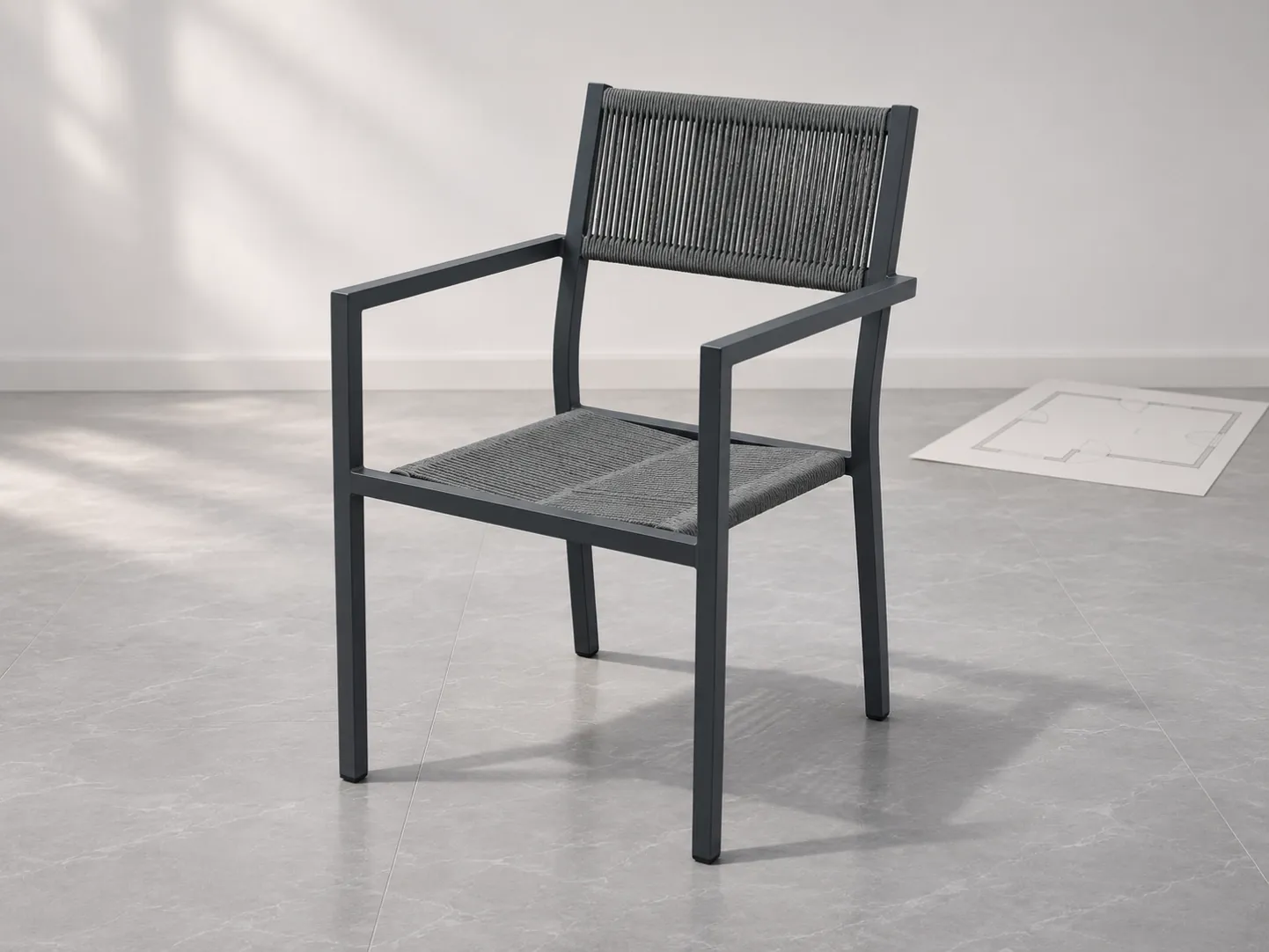
Image note: Concept visualization based on a DM-owned catalogue photo. Not a completed customer project or an exact-model specification.
Direct answer. A restaurant terrace may need a mix of outdoor dining armchairs and side chairs rather than one type at every table. The decision depends on the meal setting, how guests enter the seat, the occupied footprint and the way the venue resets tables. Armrests can change chair/table interaction; an armless side chair changes the outline but is not automatically the better purchase. Assign a proposed chair format to each table group, test the real seating arrangement, then verify exact model dimensions and materials. Keep the chair-to-table arm-height measurement with the existing dedicated guide.
Assign chairs to real table groups
Mark two-person, larger-party and any frequently joined table groups on the plan. Ask operations which positions need a more fixed arrangement and which are often reconfigured. Do not infer guest comfort, storage behavior or access compliance from a photograph. Document the operator's reason for each proposed mix.
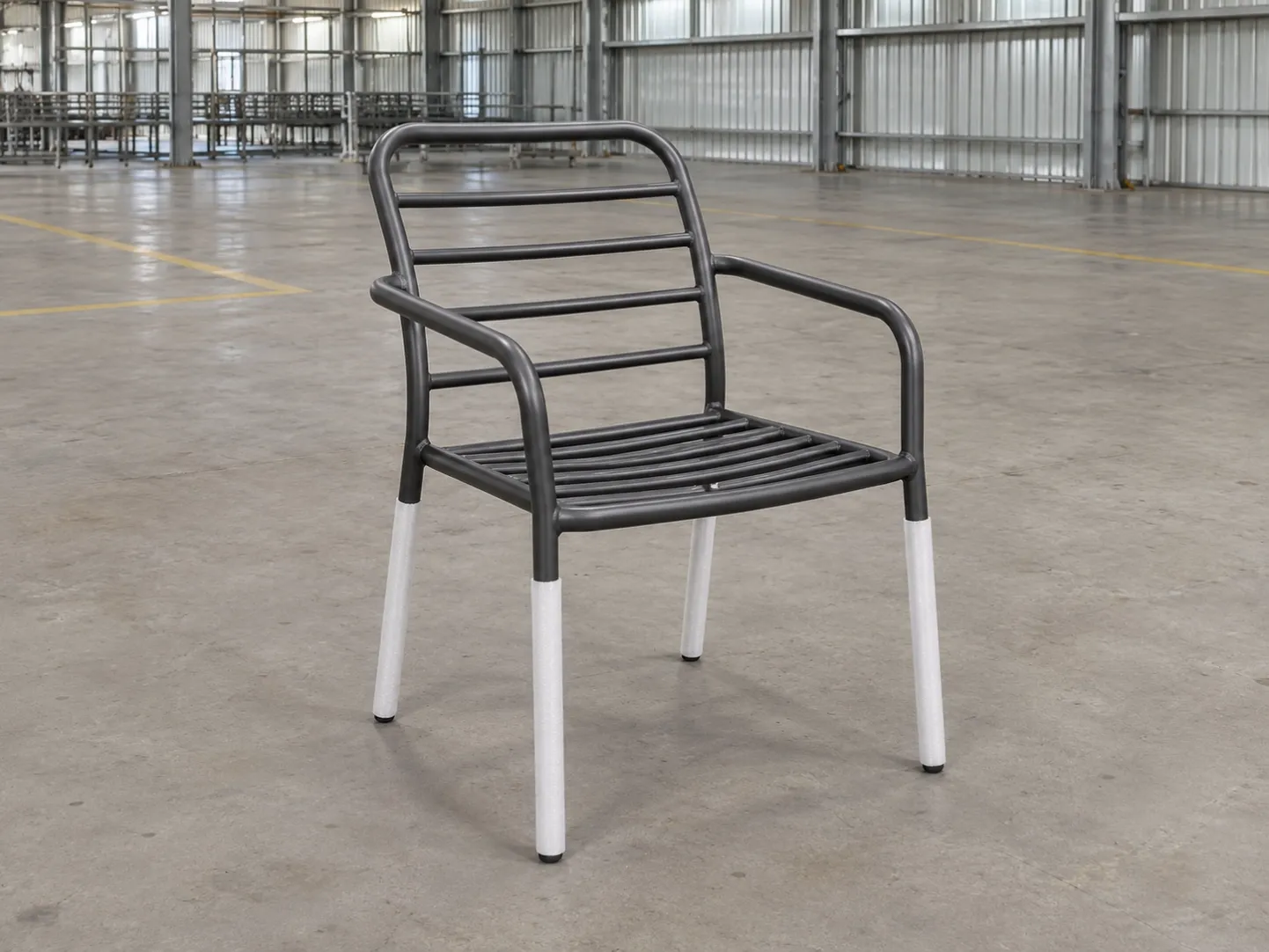
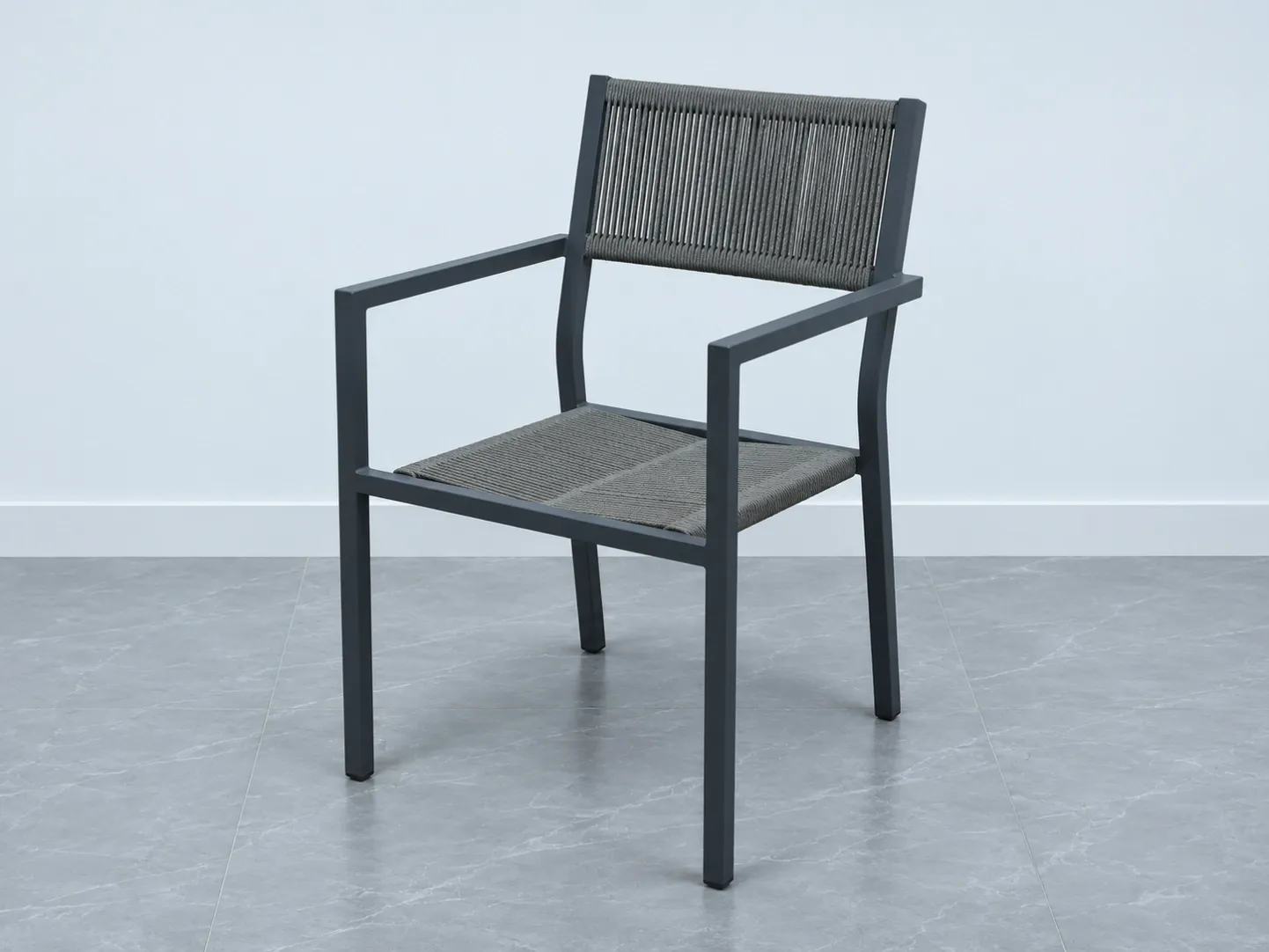
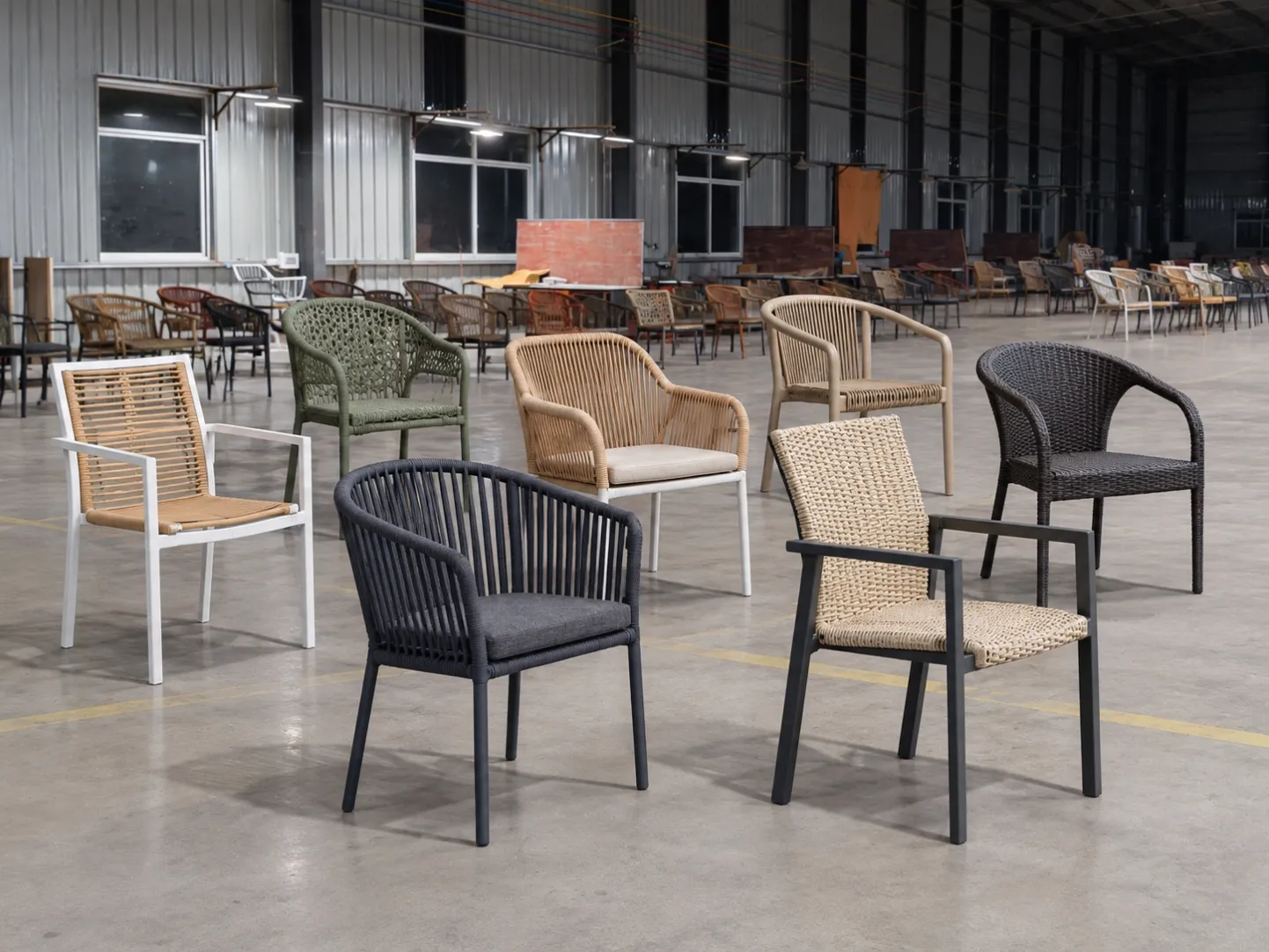
The public Outdoor Dining Chairs category provides a model shortlist, but a category photograph is not a specification sheet. Select exact chair codes and separately check their current arm format. The 2026 DM catalogue shows chair-and-table groups; it does not establish this restaurant's fitting or a universal seat count.
Run one occupied-table test
At a representative table, observe a guest sitting and leaving, the chair's position when occupied, and where staff stand to serve or clear. Repeat with each chair format. Send arm-to-table measurements to the existing clearance owner. For daily moving/storage, use the frequent rearrangement guide. This page decides the allocation, not those separate engineering questions.
Assignment sheet: Table group; activity; proposed armchair/side-chair mix; exact model; occupied-layout observation; fit evidence still missing; quantity; approving person. Record exceptions instead of forcing one chair type across all tables. A chair that looks similar in a product image is still a different RFQ line when its model code differs.
Give procurement an auditable shortlist
Send the table schedule, floor plan, model codes, estimated quantities, finish direction and destination. Request exact dimensions and a current material record for each chair. Do not make stack counts, load ratings or replacement-part promises without exact-model proof.
FAQ
Should every table use identical chairs? Only if the actual venue plan and operations support that decision.
Do armchairs always need more floor space? Check each exact occupied outline and table relationship; avoid a universal rule.
Does this article set clearance dimensions? No. The dedicated clearance guide defines the measurement request.
Who signs off the mix? Venue operations and the authorized buyer should approve the schedule and samples.