Buying Guides
How to Verify a Stacking Claim for Restaurant Patio Chairs
Request exact-model stacking instructions, then check the real restaurant storage route and record what the sample does and does not prove.
Direct answer. Treat a restaurant patio chair's stacking claim as a model-specific question, not a property of aluminum, rattan or the chair category. Before approving an order, obtain the exact model and variant, the supplier's current stacking instructions, the permitted orientation and any stated limit. Observe an approved sample stack on the actual route from terrace to storage, with staff who will move it. Record finish contact, movement and the space required for the real stack. If the supplier cannot provide model-level evidence, leave stacking out of the buying rationale and compare the chair on its other merits.
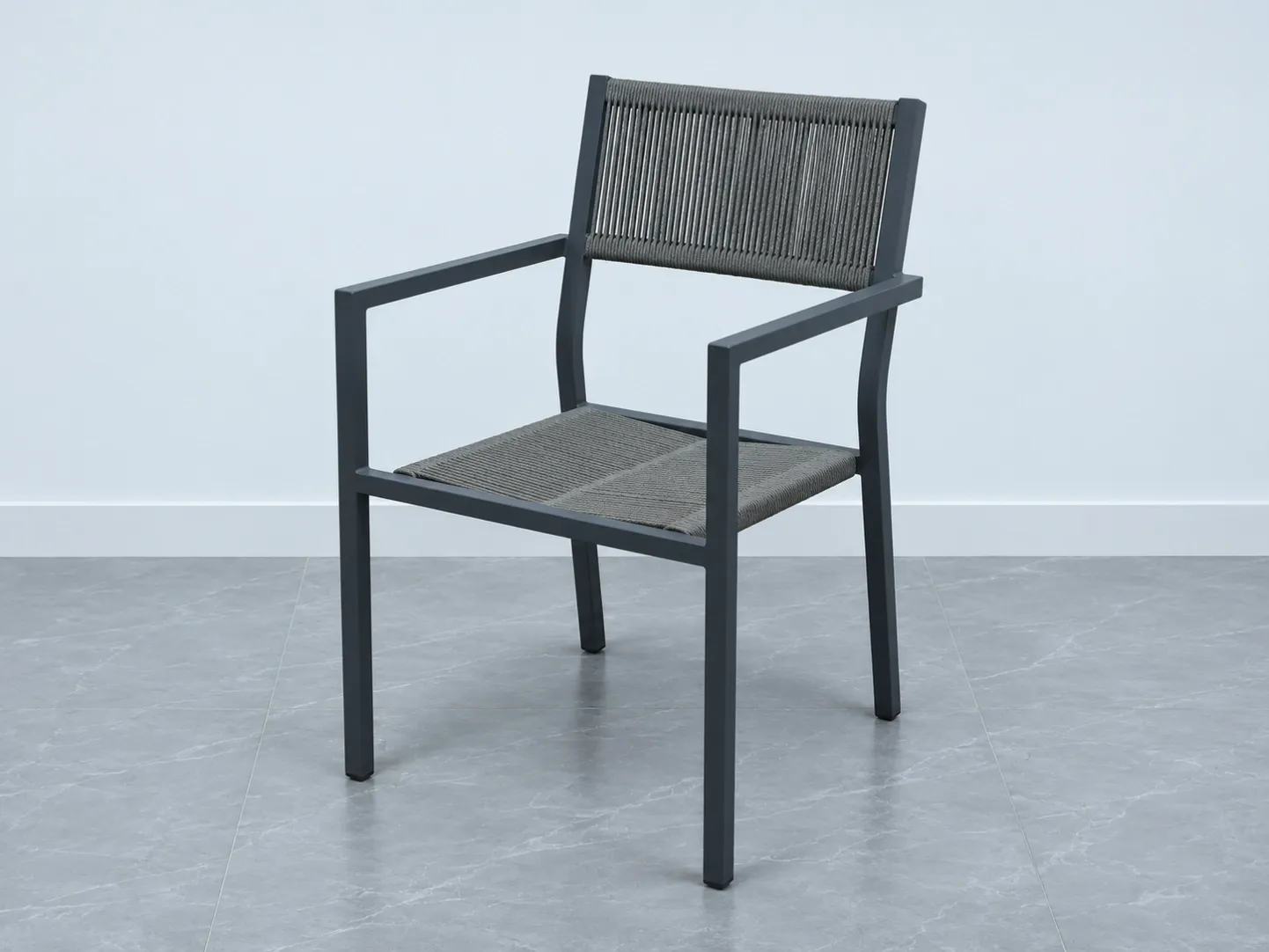
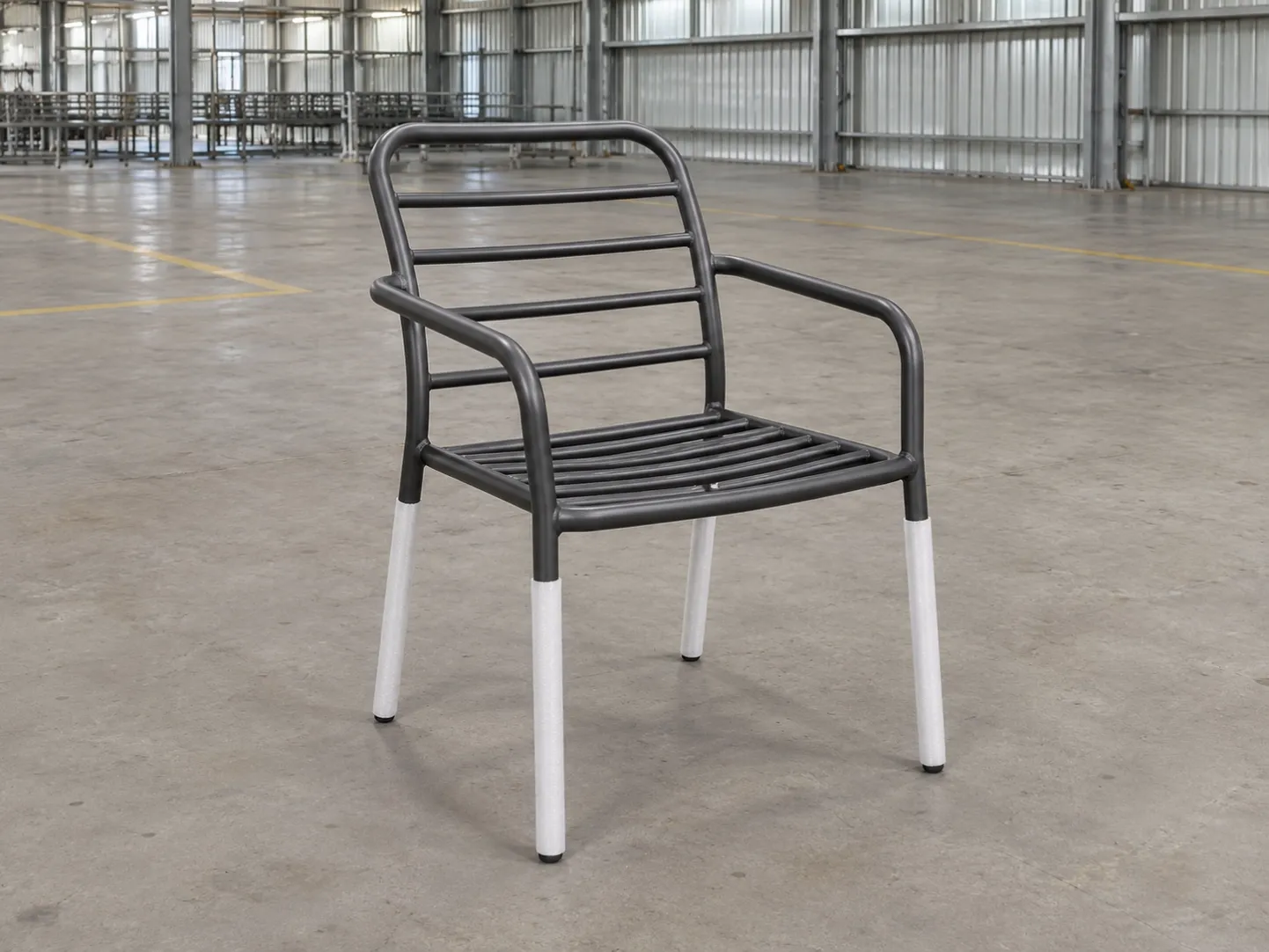
Cover image: AI-generated from a DM factory photograph of chair frames. The single chair is illustrative, not a named model or evidence of a stacking test or approved limit.
Separate usefulness from proof
The existing stackable-chair storage guide (https://www.dmfurnitures.com/blog/choose-stackable-outdoor-chairs-restaurant-storage) helps decide whether the venue needs that format. This article asks a later question: can the shortlisted exact variant be stacked in the proposed way? A similar silhouette or another brand's specification is not enough.
Request a model-level statement
Ask the supplier to identify the chair code, version, cushion state, stacking direction, permitted count if documented, protective contact points and handling instructions. Record the document date. Do not translate a photo of overlapping chairs into a maximum stack height. Do not use Nardi, Fermob or Tropitone numbers as DM specifications.
Test the working route
On a sample, observe loading, turning, door clearance and unstacking. Note whether the finish touches another frame and whether staff can move the load by the approved method. Route, floor and local safety controls remain the venue's responsibility. If the sample or supplier instruction is absent, mark the claim unresolved and use a non-stacking storage estimate.
Decide what a failed check means
Separate a supplier's written claim from the venue's observation. A sample that cannot pass through the intended doorway does not necessarily disprove its stacking design, but it does fail that particular storage plan. Conversely, a stack that appears to fit once is not evidence of an approved maximum or a repeatable staff method. Record which question failed: product instruction, finish contact, route clearance, safe handling or storage footprint. Then either change the storage plan, ask for a different model, or keep the chair on the shortlist without crediting a stacking benefit.
For a distributor, also note whether the instruction applies to every finish and cushion variant being offered. A single photograph of one version must not become an assortment-wide promise. Keep the dated instruction beside the quotation revision so a later substitution cannot inherit an unverified claim.
Put the evidence request in the RFQ
List the exact chair code and intended variant, whether any loose cushion is fitted, the venue's doorway and storage constraints, and the proposed handling route. Ask the supplier to identify the applicable document, orientation, permitted count if documented, contact protection and any disassembly or trolley requirement. Label unanswered fields HOLD, rather than filling them with another maker's figures. The purchasing lead can then compare a verified stacking option with a non-stacking alternative on the same operational basis.
Buyer record: model/variant; supplier instruction and date; sample used; permitted method; observed finish contact; intended route; unresolved questions; approval owner. Compare chair models (https://www.dmfurnitures.com/outdoor-dining-chairs), then request an exact-model quote (https://www.dmfurnitures.com/contact-us) with the stacking evidence required as a quotation question.
FAQ
Does a catalogue photo establish stackability? No. Obtain an exact-model instruction and sample evidence.
Can a competitor's stack count be reused? No. It applies only to that maker's specified product and conditions.
Should a cushion stay on during stacking? Follow the exact model's documented method; do not assume either answer.
What if no limit is documented? Keep the claim open and do not calculate storage capacity from a guessed count.