Buying Guides
Run a Cleaning Trial on a Restaurant Patio Chair Sample
A practical pre-order chair sample cleaning trial: identify the exact surface, use approved care guidance, record staff observations, and flag unresolved questions.
Direct answer. Before ordering restaurant patio chairs in volume, ask for the exact model's current care instructions and use an authorized sample to observe one ordinary cleaning and reset cycle. Have the staff who will do the work record access around the seat, back, frame and feet, the approved tools, any visible residue, and when the chair is ready for use again. Keep a photo of the sample label and record the finish and surface variant. Do not apply a competitor's cleaning recipe to a DM chair or call a material low-maintenance from its appearance. Escalate any unapproved method or unresolved residue to the supplier and purchasing lead before sign-off.
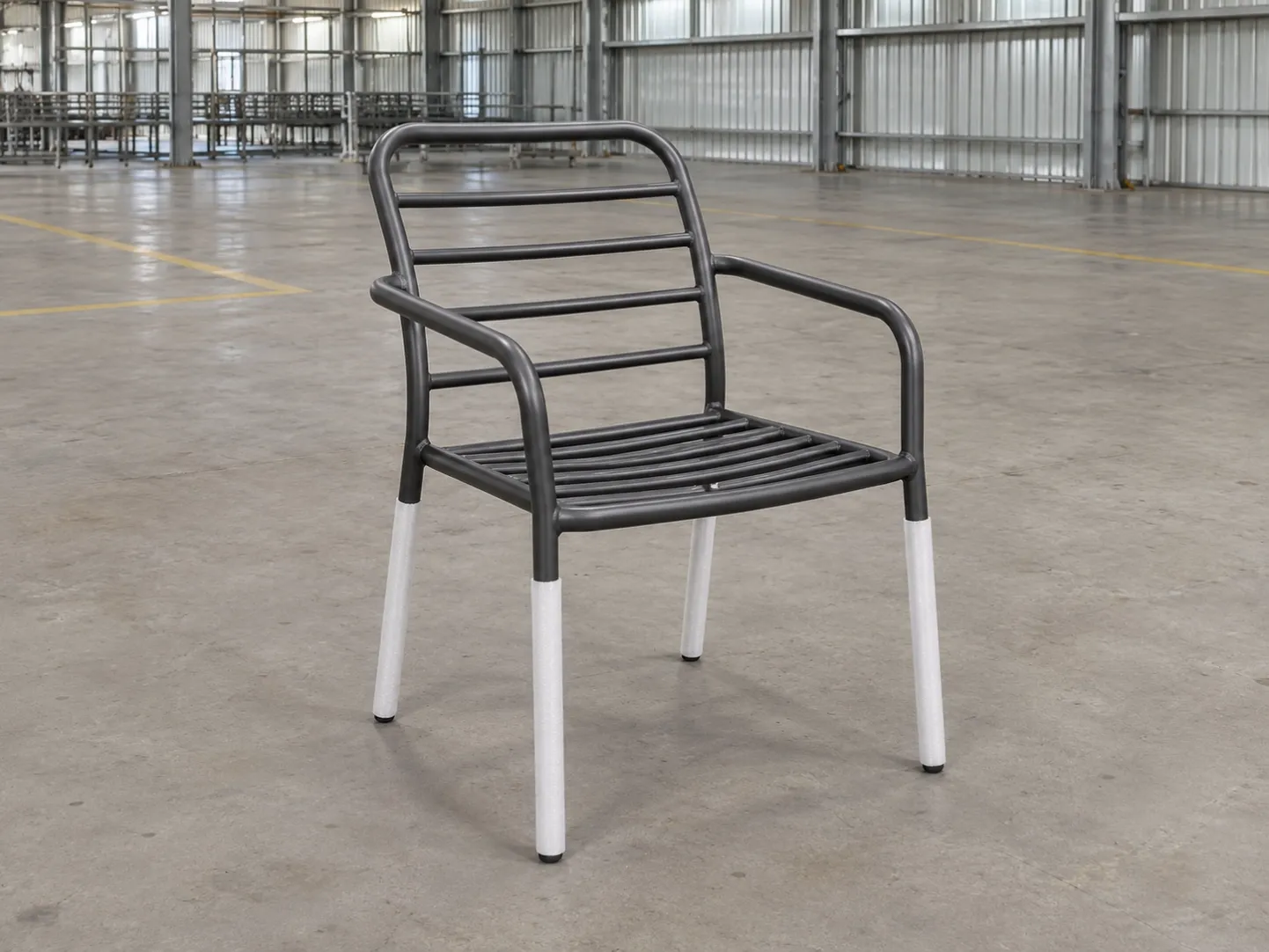
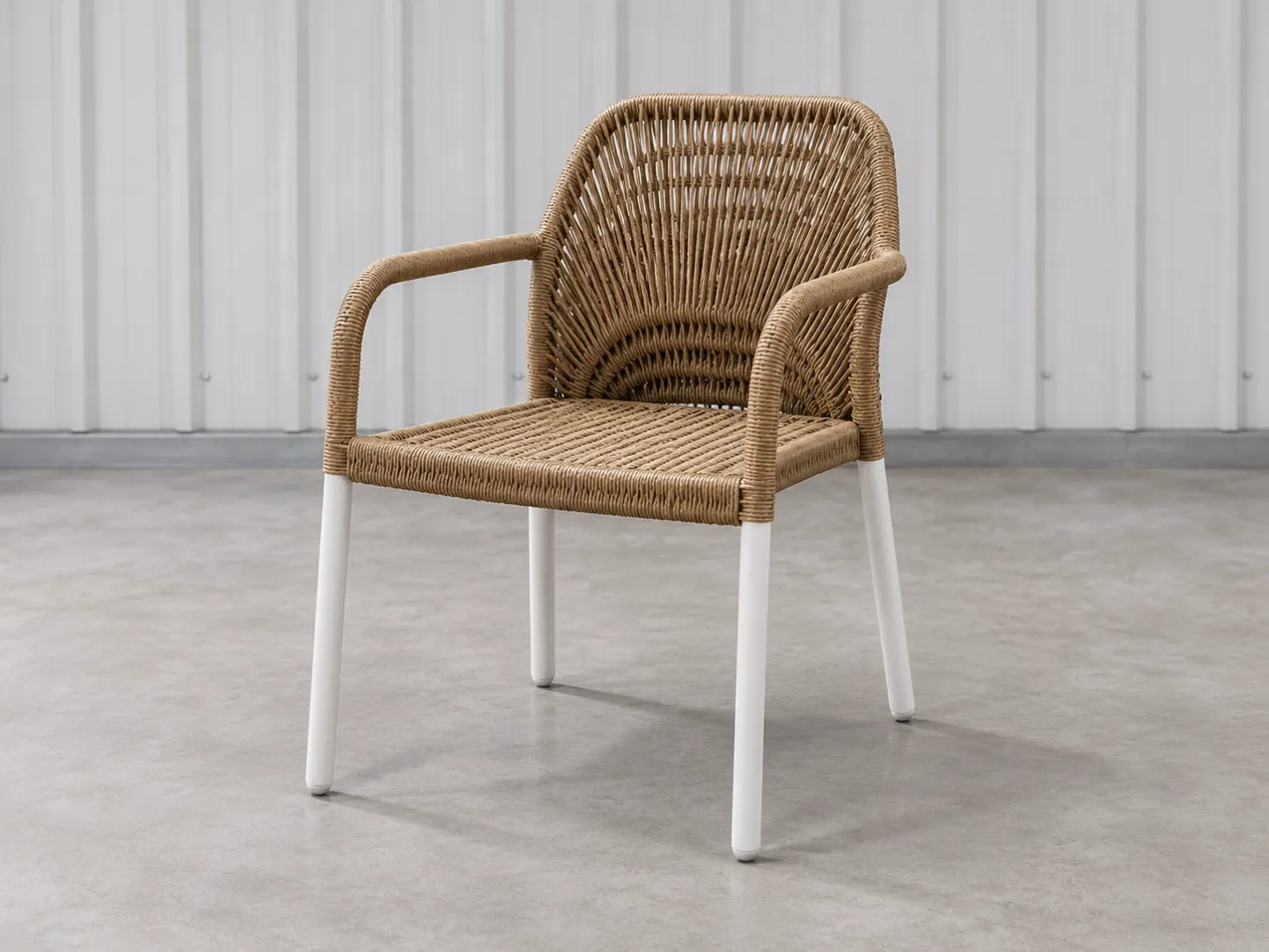
Cover image: AI-generated from a DM factory photograph to illustrate a chair. It is not a named model, a restaurant installation, or evidence of a cleaning trial.
Start with an identified chair and approved method
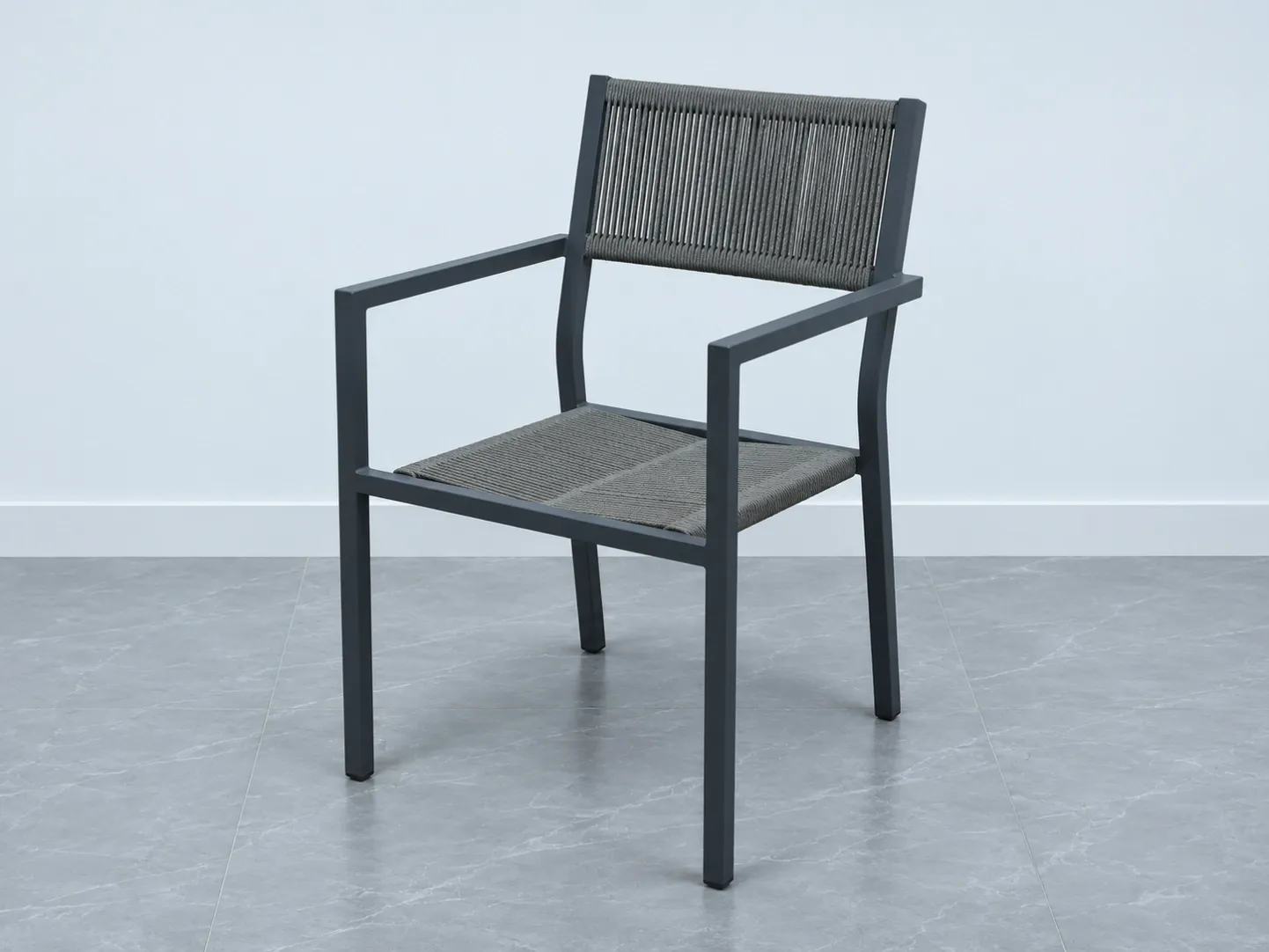
Put the model code, current finish, seat/back construction and sample identifier on the trial sheet. The D50007 product record (https://www.dmfurnitures.com/products/aluminum-outdoor-dining-chair-d50007) is a PE twist-rattan reference. The dining-chair category also identifies D50070 as a Textilene-seat alternative. These are different constructions, not evidence that one takes less work. Request the supplier's instructions for the exact quoted variant; if unavailable, do not improvise a chemical or tool trial.
Observe a normal service reset
Agree a representative non-damaging soil or use condition with the venue and supplier. Record what staff can reach while the chair is in its usual position, then what requires moving it. Observe the seat, back junction, frame corners and floor-contact areas without making unapproved disassembly or scrubbing part of the test. Note whether the approved method leaves water or debris that must be cleared before the next guest. The venue's own food-safety and cleaning rules govern the service, and the supplier's material-specific care instructions govern the furniture.
Trial field Record before approval
Identity Exact model, finish/surface variant, sample label and care-document date
Method Supplier-approved product, tool and sequence; unresolved if not documented
Observation Access points, residue, drying/reset question and staff comments
Decision Keep on shortlist, request clarification or HOLD; named operator and purchaser
Distinguish cleaning access from material performance
The trial is a check of one venue's access and reset routine, not a laboratory comparison of two materials. If a joint or woven area retains debris after an approved normal clean, record the location, method and photo, then ask the supplier whether another approved method applies. Do not infer a hygiene rating, lifetime, stain resistance or comparative cleaning speed from one observation. The purchaser may choose a different chair because its shape is easier for that team to handle, but that is a site decision, not a universal product claim.
The trial also needs a stopping rule. If the exact-model care instruction is missing, the sample identity is unclear, or the venue's usual chemical is not confirmed compatible, do not perform an improvised treatment. Record the gap and request written clarification. Keep the trial sheet and the care-document revision with the model shortlist so the final quotation refers to the same surface and finish that staff reviewed.
Turn observations into a supplier question
Send the model code, finish and seat/back construction, a photo of the sample label, the proposed approved method, and the specific access or residue question. Ask the supplier for the current care guidance for that variant; do not request a guarantee based on the restaurant's one shift. The operator can then record whether a normal reset is workable, while the purchasing lead decides whether the chair proceeds to price and configuration comparison.
Do not turn a single trial into a durability, hygiene or cleaning-time guarantee. The material guide (https://www.dmfurnitures.com/blog/outdoor-furniture-material-notes-b2b-buyers) provides broader comparison questions; the sample-approval guide (https://www.dmfurnitures.com/blog/outdoor-furniture-sample-approval-before-production) covers the wider specification release. Compare exact models in Outdoor Dining Chairs (https://www.dmfurnitures.com/outdoor-dining-chairs), then send the chosen model and open care questions to DM Furniture (https://www.dmfurnitures.com/contact-us) for a current quotation.
FAQ
Can the restaurant use its usual cleaning chemical in the trial? Only after the supplier confirms compatibility with the exact chair materials and the venue approves that method.
Does a Textilene or woven label prove faster cleaning? No. Construction, access, soil and the approved care method vary by model.
Should the sample be scrubbed to simulate years of use? No. Use only the approved care method; a single service reset is not a durability test.
Who signs off the result? The venue's operator records practicality and the authorized purchaser decides whether to retain the model.