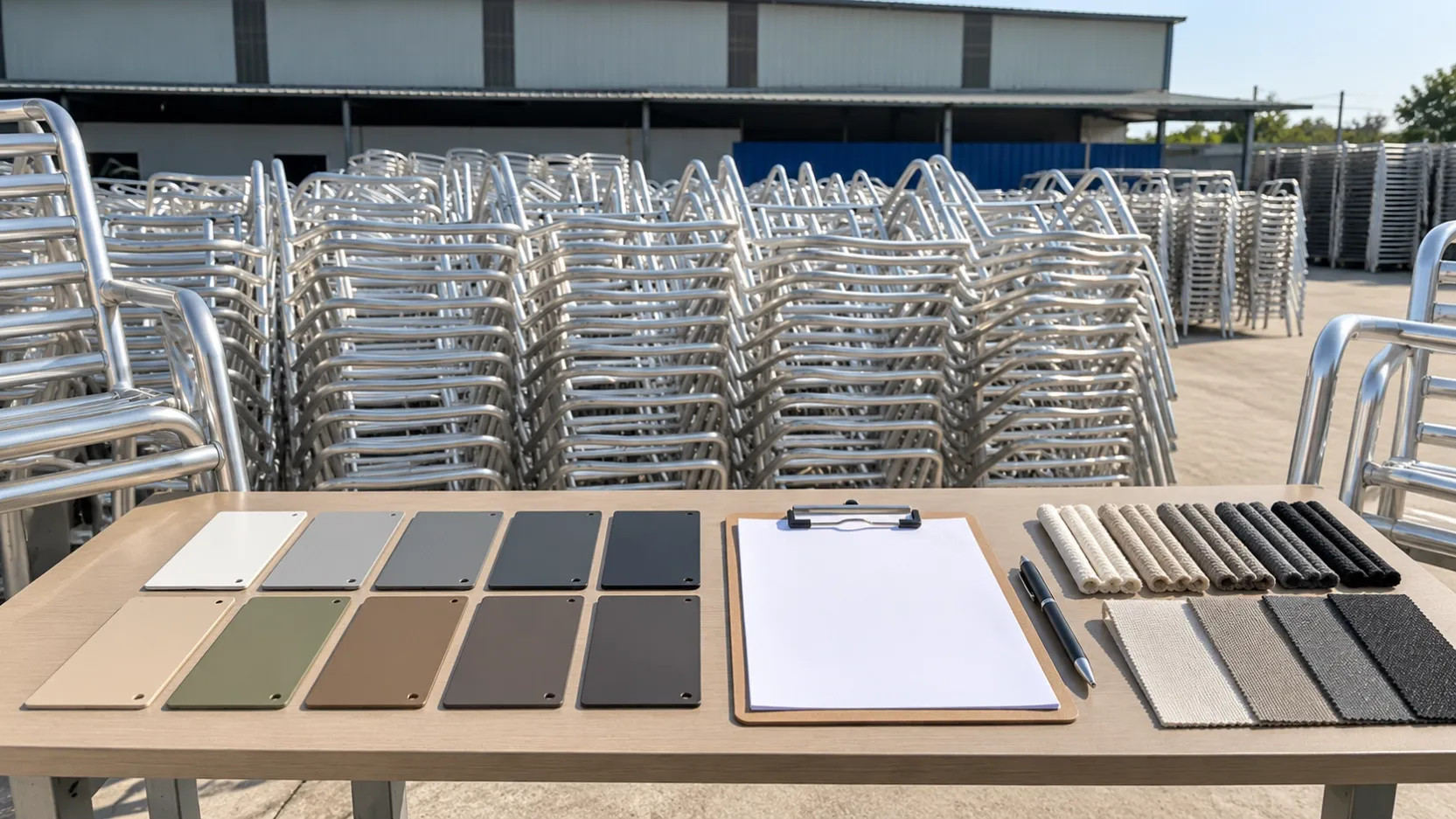
A receiving record should show what arrived, what was expected and what was visibly different. Capture evidence before items are mixed into site stock, while keeping observations separate from decisions about cause, liability, repair or acceptance.
Prepare the expected record before unloading
Give the receiving team the current purchase order, approved line items, supplier packing information, shipment reference and the names of people authorised to make decisions. Mark superseded documents clearly so the team does not compare the delivery with an old revision.
The purchase-order line-item guide explains how to keep model, variant, quantity and approved references visible. The receiving record should use the same identifiers.
Record differences in a consistent structure
Suggested discrepancy fields| Field | Record | Avoid |
|---|
| Reference | Purchase order, line, package or shipment identifier | “The grey chair order” without a traceable number |
| Expected | Documented model, configuration and quantity | Information copied from an obsolete quotation |
| Received | Counted quantity and visible identification | Estimating from a stack without counting |
| Observation | Neutral description of package or item condition | Guessing the cause or assigning blame |
| Evidence | Photo number, location, date and person recording | Unlabelled images detached from the record |
| Status | Segregated, awaiting instruction, accepted or another defined state | Moving affected items into normal stock without a decision |
Photograph the sequence, not only a close-up
Start with the unopened load or package group, then show the identifier and finally the specific observation. Include a scale reference where useful without covering the issue. Keep original image files and link them to the record rather than relying on screenshots in a chat.
If unpacking is required to identify an issue, record the sequence and retain relevant packaging until the responsible parties advise otherwise. Do not make an unauthorised repair, alteration or disposal that removes evidence.
Separate quantity, identity, package and condition
A quantity difference is not the same as a model difference. A damaged outer package does not by itself prove product damage, and an intact package does not prove every item is correct. Use separate fields so the review can reach a precise conclusion.
When several packages show the same observation, record both the total checked and the number affected. Avoid broad statements such as “all damaged” when the inspection scope was smaller.
Control the follow-up
- Notify the agreed supplier and internal contacts through the contractual channel
- State the deadline or operational need without inventing entitlement
- Ask what additional evidence or inspection is required
- Record any temporary segregation or use restriction
- Keep each response, decision and action under the same case reference
- Close the record only after the agreed action is documented
This guide supports evidence organisation. It does not determine ownership of risk, insurance coverage, claim validity or contractual acceptance. Those decisions depend on the applicable documents and professional advice.
Connect receiving evidence to future orders
Use recurring, verified findings to improve future product records, packing instructions and receiving checklists. Do not turn one observation into a supplier-wide claim. Preserve the order, model and batch context.
For package identification, connect the record to the carton-mark preparation guide. For supplier comparison, return to the quotation comparison guide.
Common questions
Should the driver or carrier sign the record?
Follow the shipment documents, contractual process and local practice. A signature may acknowledge an observation but its legal effect should not be assumed.
Can we discard wet or torn packaging immediately?
Protect people and goods first, then photograph and retain relevant evidence when safe and permitted. Follow the responsible party’s instructions for disposal.
Should we describe the cause of damage?
Record visible facts and the sequence observed. State a cause only when the appropriate party has confirmed it.
What if the model label is missing?
Segregate the item, record photographs and order context, and ask the supplier to identify it. Do not assign a model from appearance alone.
Keep product identity clear from the first enquiry
Clear model references, approved configurations and quantity lines make receiving control easier. Share these requirements when you request a quotation.
Discuss your outdoor furniture enquiry
Further reading
The UN/EDIFACT Receiving Advice message describes reporting physical receipt and discrepancies in products, quantities, terms and packages. GS1 identification guidance explains the role of stable trade-item identifiers. These references do not decide a specific claim.
A receiving record should show what arrived, what was expected and what was visibly different. Capture evidence before items are mixed into site stock, while keeping observations separate from decisions about cause, liability, repair or acceptance.
Prepare the expected record before unloading
Give the receiving team the current purchase order, approved line items, supplier packing information, shipment reference and the names of people authorised to make decisions. Mark superseded documents clearly so the team does not compare the delivery with an old revision.
The purchase-order line-item guide explains how to keep model, variant, quantity and approved references visible. The receiving record should use the same identifiers.
Record differences in a consistent structure
Suggested discrepancy fields| Field | Record | Avoid |
|---|
| Reference | Purchase order, line, package or shipment identifier | “The grey chair order” without a traceable number |
| Expected | Documented model, configuration and quantity | Information copied from an obsolete quotation |
| Received | Counted quantity and visible identification | Estimating from a stack without counting |
| Observation | Neutral description of package or item condition | Guessing the cause or assigning blame |
| Evidence | Photo number, location, date and person recording | Unlabelled images detached from the record |
| Status | Segregated, awaiting instruction, accepted or another defined state | Moving affected items into normal stock without a decision |
Photograph the sequence, not only a close-up
Start with the unopened load or package group, then show the identifier and finally the specific observation. Include a scale reference where useful without covering the issue. Keep original image files and link them to the record rather than relying on screenshots in a chat.
If unpacking is required to identify an issue, record the sequence and retain relevant packaging until the responsible parties advise otherwise. Do not make an unauthorised repair, alteration or disposal that removes evidence.
Separate quantity, identity, package and condition
A quantity difference is not the same as a model difference. A damaged outer package does not by itself prove product damage, and an intact package does not prove every item is correct. Use separate fields so the review can reach a precise conclusion.
When several packages show the same observation, record both the total checked and the number affected. Avoid broad statements such as “all damaged” when the inspection scope was smaller.
Control the follow-up
- Notify the agreed supplier and internal contacts through the contractual channel
- State the deadline or operational need without inventing entitlement
- Ask what additional evidence or inspection is required
- Record any temporary segregation or use restriction
- Keep each response, decision and action under the same case reference
- Close the record only after the agreed action is documented
This guide supports evidence organisation. It does not determine ownership of risk, insurance coverage, claim validity or contractual acceptance. Those decisions depend on the applicable documents and professional advice.
Connect receiving evidence to future orders
Use recurring, verified findings to improve future product records, packing instructions and receiving checklists. Do not turn one observation into a supplier-wide claim. Preserve the order, model and batch context.
For package identification, connect the record to the carton-mark preparation guide. For supplier comparison, return to the quotation comparison guide.
Common questions
Should the driver or carrier sign the record?
Follow the shipment documents, contractual process and local practice. A signature may acknowledge an observation but its legal effect should not be assumed.
Can we discard wet or torn packaging immediately?
Protect people and goods first, then photograph and retain relevant evidence when safe and permitted. Follow the responsible party’s instructions for disposal.
Should we describe the cause of damage?
Record visible facts and the sequence observed. State a cause only when the appropriate party has confirmed it.
What if the model label is missing?
Segregate the item, record photographs and order context, and ask the supplier to identify it. Do not assign a model from appearance alone.
Keep product identity clear from the first enquiry
Clear model references, approved configurations and quantity lines make receiving control easier. Share these requirements when you request a quotation.
Discuss your outdoor furniture enquiry
Further reading
The UN/EDIFACT Receiving Advice message describes reporting physical receipt and discrepancies in products, quantities, terms and packages. GS1 identification guidance explains the role of stable trade-item identifiers. These references do not decide a specific claim.
A receiving record should show what arrived, what was expected and what was visibly different. Capture evidence before items are mixed into site stock, while keeping observations separate from decisions about cause, liability, repair or acceptance.
Prepare the expected record before unloading
Give the receiving team the current purchase order, approved line items, supplier packing information, shipment reference and the names of people authorised to make decisions. Mark superseded documents clearly so the team does not compare the delivery with an old revision.
Record differences in a consistent structure
Suggested discrepancy fields
Field | Record | Avoid
Reference | Purchase order, line, package or shipment identifier | “The grey chair order” without a traceable number
Expected | Documented model, configuration and quantity | Information copied from an obsolete quotation
Received | Counted quantity and visible identification | Estimating from a stack without counting
Observation | Neutral description of package or item condition | Guessing the cause or assigning blame
Evidence | Photo number, location, date and person recording | Unlabelled images detached from the record
Status | Segregated, awaiting instruction, accepted or another defined state | Moving affected items into normal stock without a decision
Photograph the sequence, not only a close-up
Start with the unopened load or package group, then show the identifier and finally the specific observation. Include a scale reference where useful without covering the issue. Keep original image files and link them to the record rather than relying on screenshots in a chat.
If unpacking is required to identify an issue, record the sequence and retain relevant packaging until the responsible parties advise otherwise. Do not make an unauthorised repair, alteration or disposal that removes evidence.
Separate quantity, identity, package and condition
A quantity difference is not the same as a model difference. A damaged outer package does not by itself prove product damage, and an intact package does not prove every item is correct. Use separate fields so the review can reach a precise conclusion.
When several packages show the same observation, record both the total checked and the number affected. Avoid broad statements such as “all damaged” when the inspection scope was smaller.
Control the follow-up
• Notify the agreed supplier and internal contacts through the contractual channel
• State the deadline or operational need without inventing entitlement
• Ask what additional evidence or inspection is required
• Record any temporary segregation or use restriction
• Keep each response, decision and action under the same case reference
• Close the record only after the agreed action is documented
This guide supports evidence organisation. It does not determine ownership of risk, insurance coverage, claim validity or contractual acceptance. Those decisions depend on the applicable documents and professional advice.
Connect receiving evidence to future orders
Use recurring, verified findings to improve future product records, packing instructions and receiving checklists. Do not turn one observation into a supplier-wide claim. Preserve the order, model and batch context.
Common questions
Should the driver or carrier sign the record?
Follow the shipment documents, contractual process and local practice. A signature may acknowledge an observation but its legal effect should not be assumed.
Can we discard wet or torn packaging immediately?
Protect people and goods first, then photograph and retain relevant evidence when safe and permitted. Follow the responsible party’s instructions for disposal.
Should we describe the cause of damage?
Record visible facts and the sequence observed. State a cause only when the appropriate party has confirmed it.
What if the model label is missing?
Segregate the item, record photographs and order context, and ask the supplier to identify it. Do not assign a model from appearance alone.
Keep product identity clear from the first enquiry
Clear model references, approved configurations and quantity lines make receiving control easier. Share these requirements when you request a quotation.
Further reading