Oct 26, 2026Buying Guides
Replacement Outdoor Sofa Cushions: What Buyers Need to Specify
Prepare a replacement outdoor sofa cushion request by confirming the exact model, each seat and back position, cover or insert scope, measurements, fabric reference and sample decisions.
A replacement cushion request needs more than a sofa photograph or a fabric colour. Identify the exact sofa model and revision, label every seat and back position, and record the existing cushion shape, finished dimensions, construction and attachment. Separate a cover-only request from a complete cushion request. Ask the supplier to confirm which original references still exist, which details need a new sample and whether a matching fabric is available. Do not assume that cushions from a related model are interchangeable. Keep the final dimensions and appearance subject to an approved drawing or sample before placing an order.
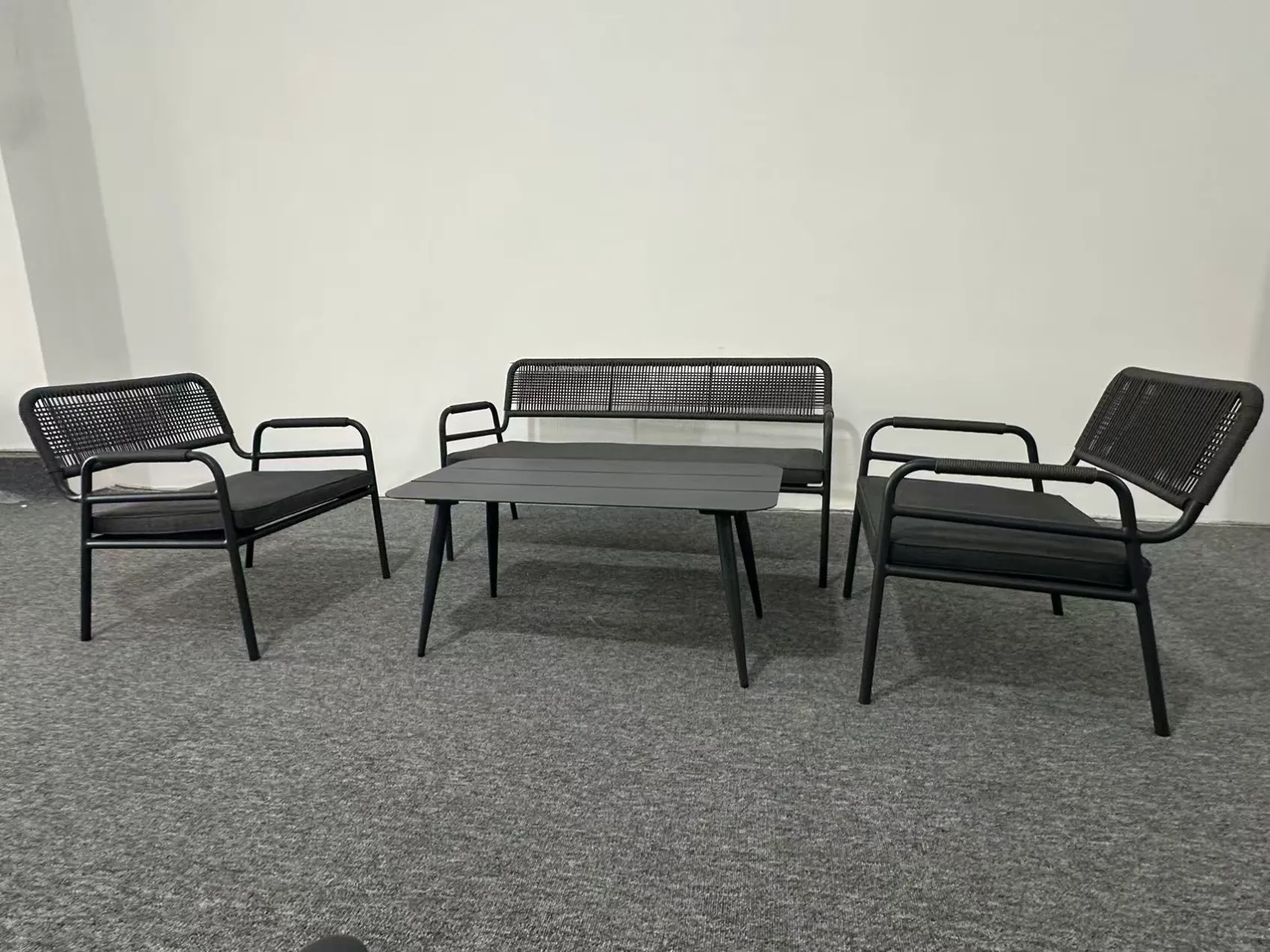
Owned D60058-4 product image for seating context. It does not establish replacement-cushion availability, fabric stock, cushion dimensions or compatibility with another model.
Start with the furniture identity
Find the order record, model code and, if available, the drawing or approved sample reference. Photograph the sofa from the front and rear and capture any label or distinctive joint. A modular arrangement needs its configuration recorded too: left, right, corner and centre positions are not interchangeable merely because the cushions look similar in a catalogue.
Browse the outdoor sofa sets (https://www.dmfurnitures.com/outdoor-sofa-sets) to identify a likely product family. The photographed D60058-4 sofa set (https://www.dmfurnitures.com/products/aluminum-rattan-outdoor-sofa-set-d60058-4) is a model-identification example, not proof that a cushion for an earlier order remains available or interchangeable.
Count positions before measuring
Draw a simple plan of the current arrangement. Give each cushion a position code such as seat-left, seat-centre, back-left or corner-back. Record the number of pieces requested for each position. Note whether any item is missing, compressed, distorted or altered since purchase.
If the existing cushion has changed shape through use, do not rely on it as the only measurement source. Ask the supplier which reference should control: the approved drawing, an original pattern, the furniture opening or a newly measured sample. Keep the method with the numbers, because two measurements can disagree without either being a transcription error.
Specify the replacement scope
Field | Buyer records | Supplier confirms
Identity | Sofa model, order reference, module and position | Matching product revision or unresolved difference
Scope | Cover only, insert only or complete cushion | Which components can actually be supplied
Shape and size | Drawing, measured points, units and photo orientation | Control pattern and finished dimensions
Cover | Original fabric code or physical swatch, colour, seams and closure | Current material and colour availability or proposed alternative
Insert | Known original fill reference, if documented | Construction and sample evidence; no assumed equivalence
Attachment | Ties, hook-and-loop, straps or other observed fixing | Exact placement and construction
Decision | Quantity, destination, reviewer and required approval | Quotation scope and whether a sample is needed
Compare the cover against a controlled reference
Daylight, screen settings, weathering and cleaning can change how an old cushion looks. Use the original swatch or approved fabric code where one exists. If it does not, send a physical reference or request a new swatch and treat the match as an explicit decision, not an automatic replacement.
Record piping, stitch lines, zipper location and visible panel direction as well as colour. For a hotel or multi-site programme, note whether the requirement is to match older cushions on site or to create a consistent new set across a defined area. The finish approval guide (https://www.dmfurnitures.com/blog/outdoor-furniture-finish-approval-record) explains how to keep appearance decisions traceable.
Ask what is inside, not just what is outside
Two cushions with similar covers can sit differently because the insert construction, shape or support differs. If the original fill is documented, provide that reference. If it is unknown, ask for a proposed construction and a representative sample rather than promising that a photographed replacement will feel the same.
Discuss the actual operating environment, cleaning routine and storage plan with the supplier. A hotel or resort furniture plan (https://www.dmfurnitures.com/hotel-resort-outdoor-furniture) may help identify which seating zones need separate position records. Do not infer drying performance, fabric grade, water resistance, fire performance or test results from the word "outdoor." Any requirement of that kind belongs in the project specification and needs product-specific evidence.
Check attachment and assembly on the exact frame
Photograph how the current cushion meets the frame and whether ties, tabs or other fixings are present. Mark their positions on the drawing or template. A cushion that fits the seating area but cannot be fixed as intended may move in service.
Ask how the proposed cushion will be checked on the exact sofa or a controlled matching frame. If the frame is an older version or the original reference is unavailable, make fit approval a distinct sample decision. Avoid assuming that a third-party custom cushion or another DM model will fit.
Keep the order and future handover aligned
Once a sample is accepted, record its version, cushion positions, approved material references and any accepted differences. Carry the same position codes into the purchase order and packing list; otherwise a correct total quantity can still produce the wrong mix of seats and backs.
The sample approval guide (https://www.dmfurnitures.com/blog/outdoor-furniture-sample-approval-before-production) covers the production-release decision. For ongoing site records, connect the approved cushion identity to the maintenance handover file (https://www.dmfurnitures.com/blog/outdoor-furniture-maintenance-handover-file). This documentation does not establish a standing spare-parts or replacement programme.
Use a short buyer checklist
• Exact sofa model, order reference, module arrangement and revision recorded.
• Each seat and back position photographed, labelled and counted.
• Cover-only, insert-only or complete-cushion scope stated per line.
• Dimensions tied to a declared measurement method and control reference.
• Fabric, colour, seams, closures and attachments checked against evidence.
• Supplier asked to confirm availability, alternatives, sample need and quotation scope.
• No order released on an unresolved size, appearance or compatibility assumption.
Common questions
Q: Can I order a cover without replacing the insert?
A:That may be possible for some products, but it is not a default DM offer. State the requested scope and ask for exact-model feasibility and fit confirmation.
Q: Should I measure the worn cushion or the sofa frame?
A:Record both when practical and disclose their condition. Ask which approved drawing, pattern or sample should control the finished size; worn foam can distort a direct measurement.
Q: Will a new cushion match fabric that has weathered outdoors?
A:Do not assume an exact visual match. Compare a current approved swatch with the site sample and record any accepted difference before ordering.
Q: Does an existing model code guarantee replacement availability?
A:No. The code helps identify the furniture, but component availability, current material and commercial terms require a separate supplier confirmation.
Send a position-by-position inquiry
Include the sofa model, photos, cushion-position list, desired replacement scope, available drawings or swatches, estimated quantities and destination. Ask DM Furniture to confirm whether the requested cushions or references can be supplied for that exact model and what remains to be sampled or specified. For mixed furniture programmes, the RFQ preparation guide (https://www.dmfurnitures.com/blog/how-to-prepare-outdoor-furniture-rfq) can help organize the wider request.
Research boundary
Current examples from FoamOrder (https://www.foamorder.com/custom-cushions/outdoor-cushions), Patio Lane (https://patiolane.com/products/custom-outdoor-sofa-cushions) and Homecrest (https://www.homecrest.com/documents/catalogs/homecrestReplacementFAQ.pdf) show why buyers ask about shapes, components and original-model identity. FIRA's furniture sourcing guide (https://www.fira.co.uk/images/Sourcing-Furniture-Products-in-the-Supply-Chain.pdf) supports keeping specifications and sample approvals traceable. These are independent sources, not evidence of DM replacement stock, terms or performance.